UX & Product Design
Mobile App
/Roots
A financial simulator.
Most people are making real financial decisions with almost no preparation, and the apps that exist largely assume you already understand the basics. My task was to create a financial solution that would make financial education and planning easier and less intimidating for everyone.
/Role: Lead Product Designer · Certificate Capstone (University of Washington)
/Timeline: 6 months · 2025
/Scope: UX Research · Information Architecture · Visual Design · Design Systems · Gamification · Motion
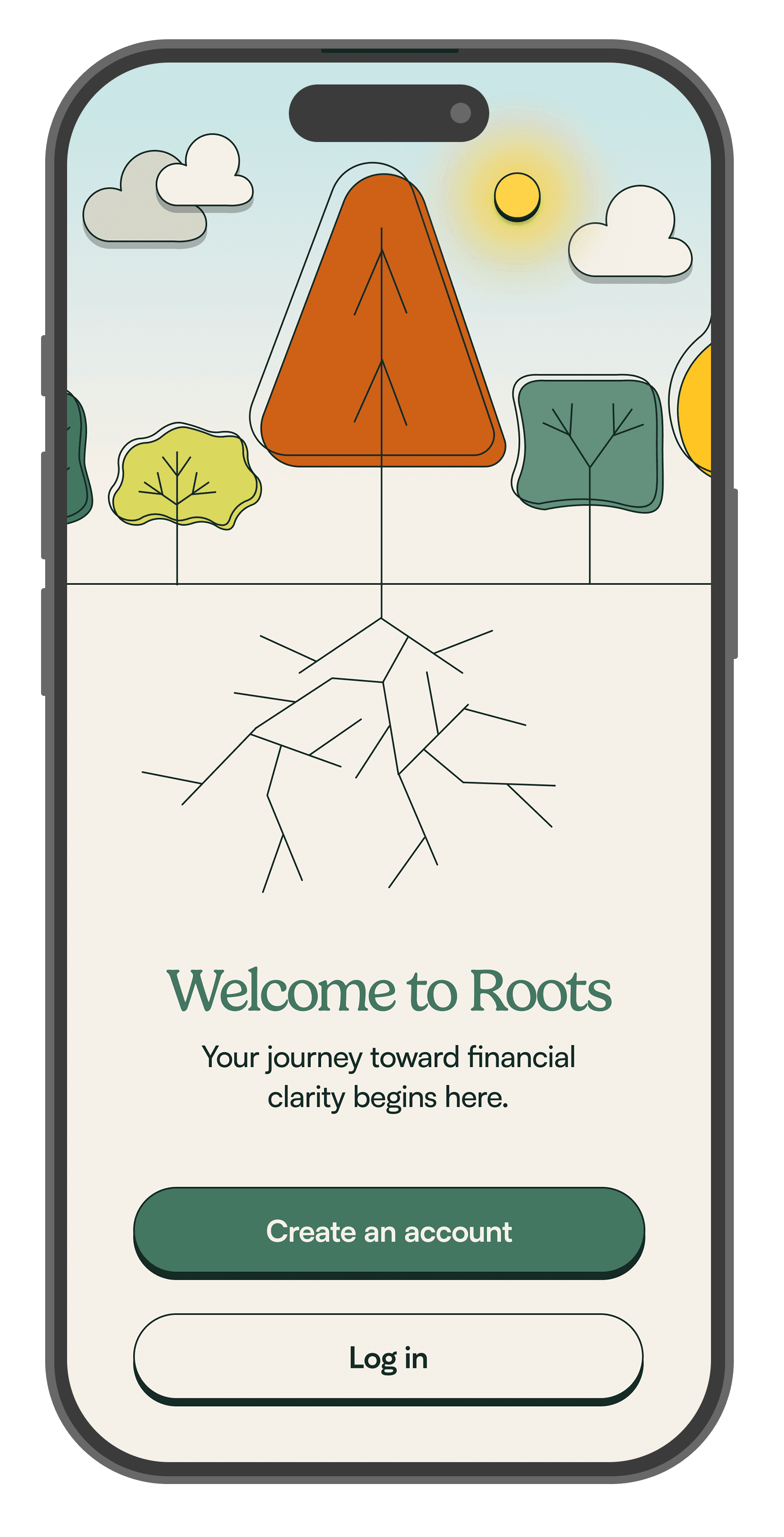
The Problem
Financial apps exist.
Financial confidence doesn't.
Most people in their teens, twenties, and early thirties are making real financial decisions - first paychecks, student loans, rent, credit cards; with almost no preparation. Schools don't teach it. Parents don't always know how either.
When I looked at what existed - YNAB, SoFi, Greenlight, Zogo; I found tools that either tracked money, or taught concepts in a generic way that had nothing to do with actual situation.
Existing apps feel complex and intimidating
Most financial tools weren't designed for beginners. The language, the interface, the assumptions, all of it signals that you need to already know what you're doing before you start.
The content is abstract, not practical
Learning about a random topic doesn't help you if you are looking for something specific in your current situation. People need guidance connected to real decisions, not definitions.
Apps assume confidence instead of building it
Every app on the market treats financial literacy as a prerequisite. None of them are designed to take someone from zero to build the confidence to even open an account or make a first investment.
Nothing fits your specific situation
A student, a freelancer, and a new parent have entirely different financial realities. Generic tools speak to a generic person and most users don't see themselves in any of it.
90%
of Gen Z already use digital finance apps for budgeting or investing
35%
financial literacy rate among adults 18 to 24 is the lowest of any age group
/Personas
Benny Beginner
First job, recent grad
Needs financial literacy
Intimidated by investing
Stressed, overwhelmed
DIY Denise
Mid-career investor
Wants portfolio diversity
Confused by options
Time + info overload
/Research Methods
User Interviews
Affinity Mapping
Empathy mapping
Journey Mapping
Competitive Audit
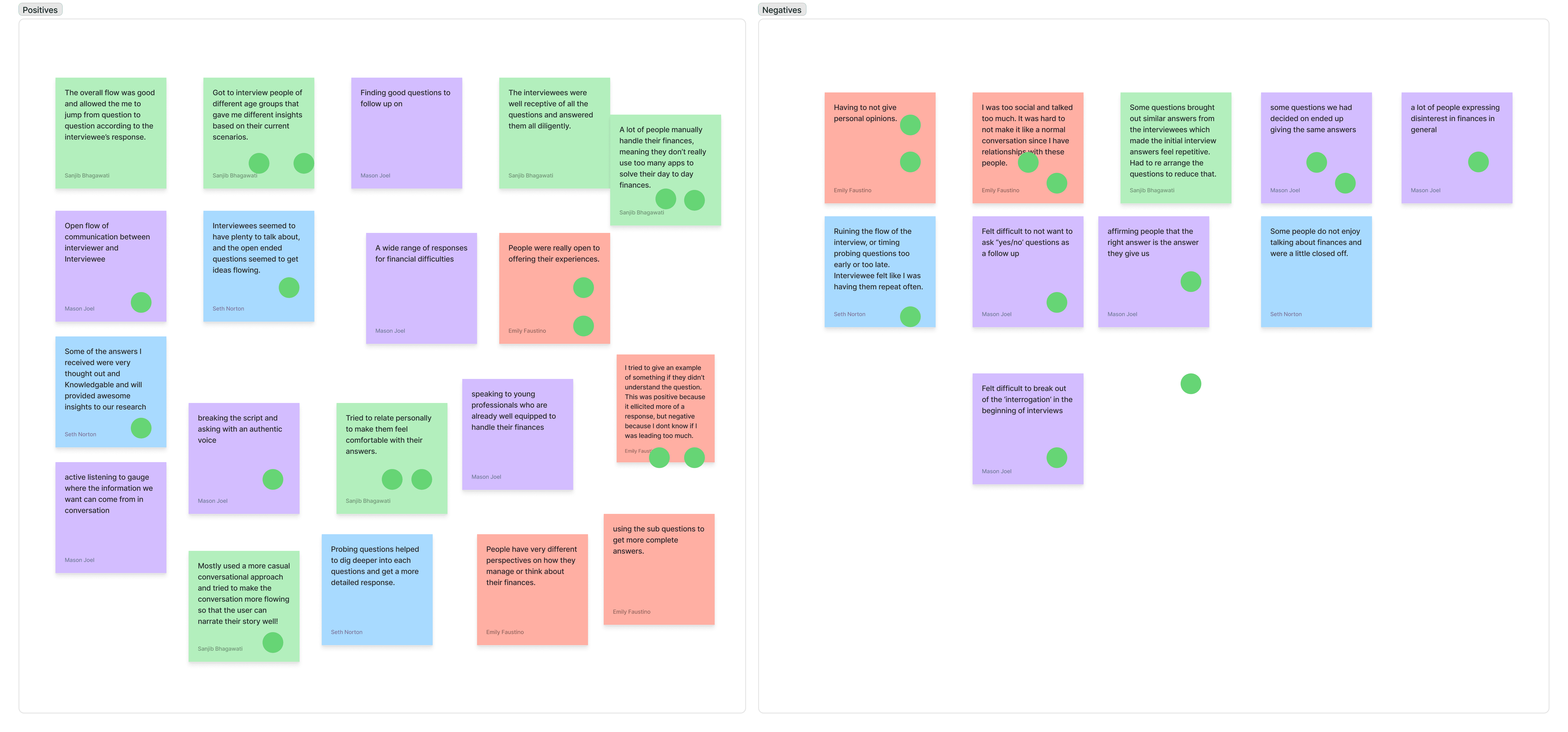
Most apps feel like they're for people who already know all about money.”
- Research participant, age 34
The Concept
A financial simulator.
The research pointed to one core insight: people don't build financial confidence by being taught, they build it by experiencing consequences. So the question became: what if you could simulate decades of financial decisions, make every mistake, go back, try differently, and walk away knowing what you'd actually do when it counts?
That became the core concept of Roots. A financial simulator.
/How the tree emerged
The form wasn't planned, it came through the concept. Early ideas centered on a timeline: a linear progression of challenges based on your age. But as the decision-making mechanic developed, paths started branching. Different choices led to different futures. The structure was no longer a line, it was a tree.
And because the branching happened downward, the metaphor clicked: roots. The deeper and healthier your financial roots, the stronger your tree grows. The nature system didn't get imposed on the product, it emerged from the design logic.
The Process
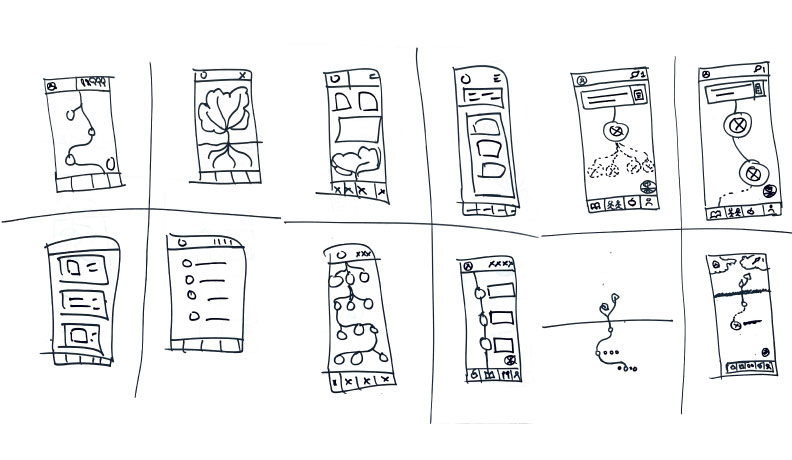
Seven stages, two rounds of user feedback.
Sketches. Paper lo-fi to
rapidly explore tree
metaphor, challenge layouts,
and navigation patterns
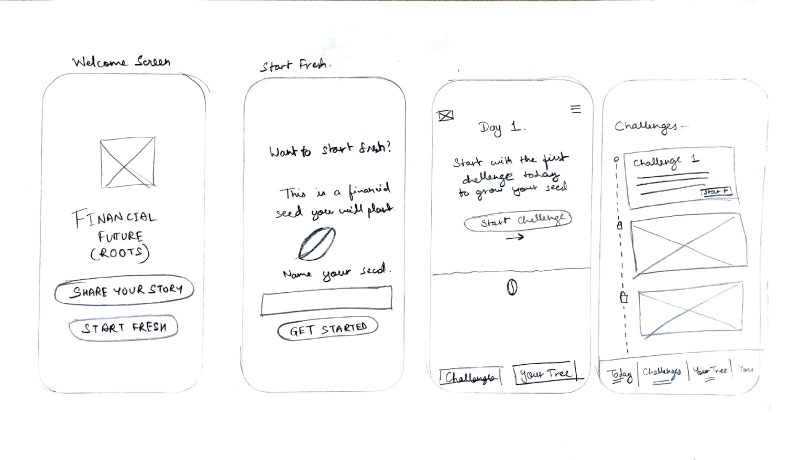
Wirefreames
Concept Testing
Sitemap
User Flows
Low-Fi Screens
Usability Testing
Visual Language
Reflective. Grounded. Motivating. Safe.
The visual system was built around four emotional qualities. Drawing on organic textures, seasonal forest photography, and Robert Frost - "Oh I marked the first for another day", the moodboard established a relationship with time and growth that felt personal rather than transactional.
Moodboard
Logo
Typography
Colors
Icons & Illustrations
Components

Key Features
Every feature solves a specific fear.
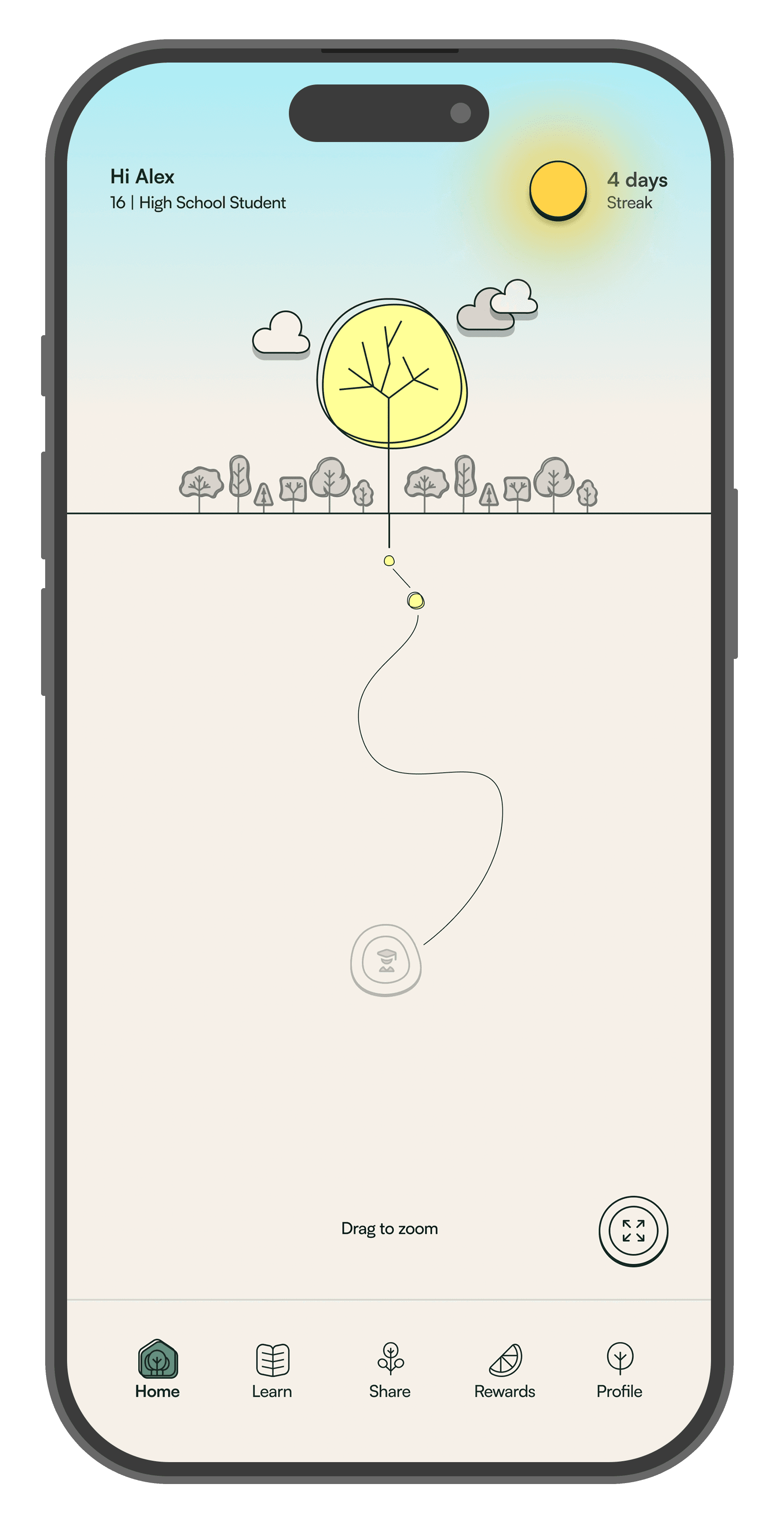
Your entire financial life, on one screen.
The home screen is split at the horizon. Above: your tree, your season, your current age in the simulation. Below: roots reaching down into nodes, each one a moment in your financial life, completed or waiting to be played. The tree grows visibly as you progress, branching differently based on every choice you make.
As you age through the simulation, new lesson categories unlock, challenges relevant to where you are in life, not some generic curriculum. An unexpected job loss at 28 teaches different things than a market crash at 45. The simulation occasionally throws curveballs entirely outside your control - emergencies, regulation changes, economic events, because real financial life does too.
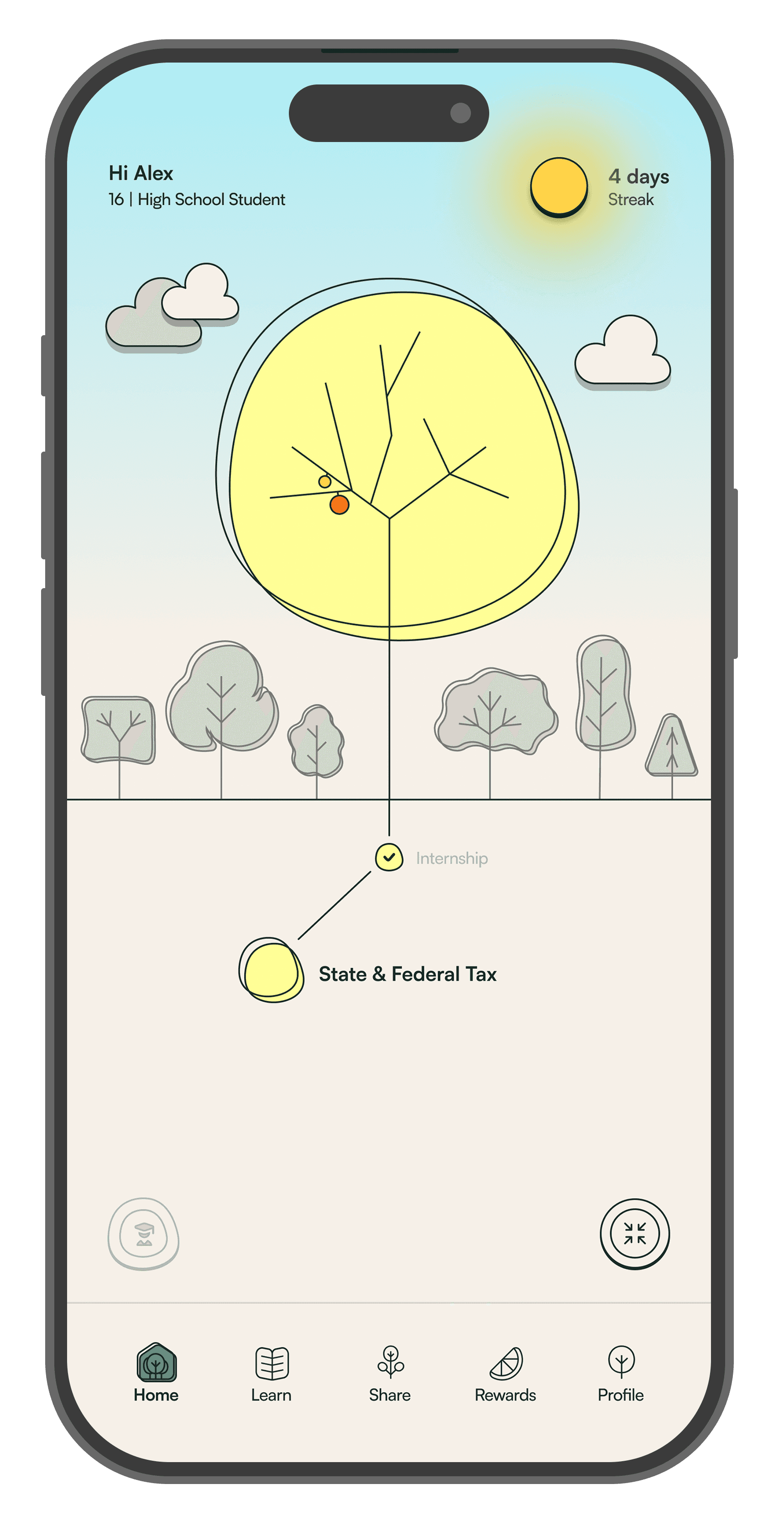
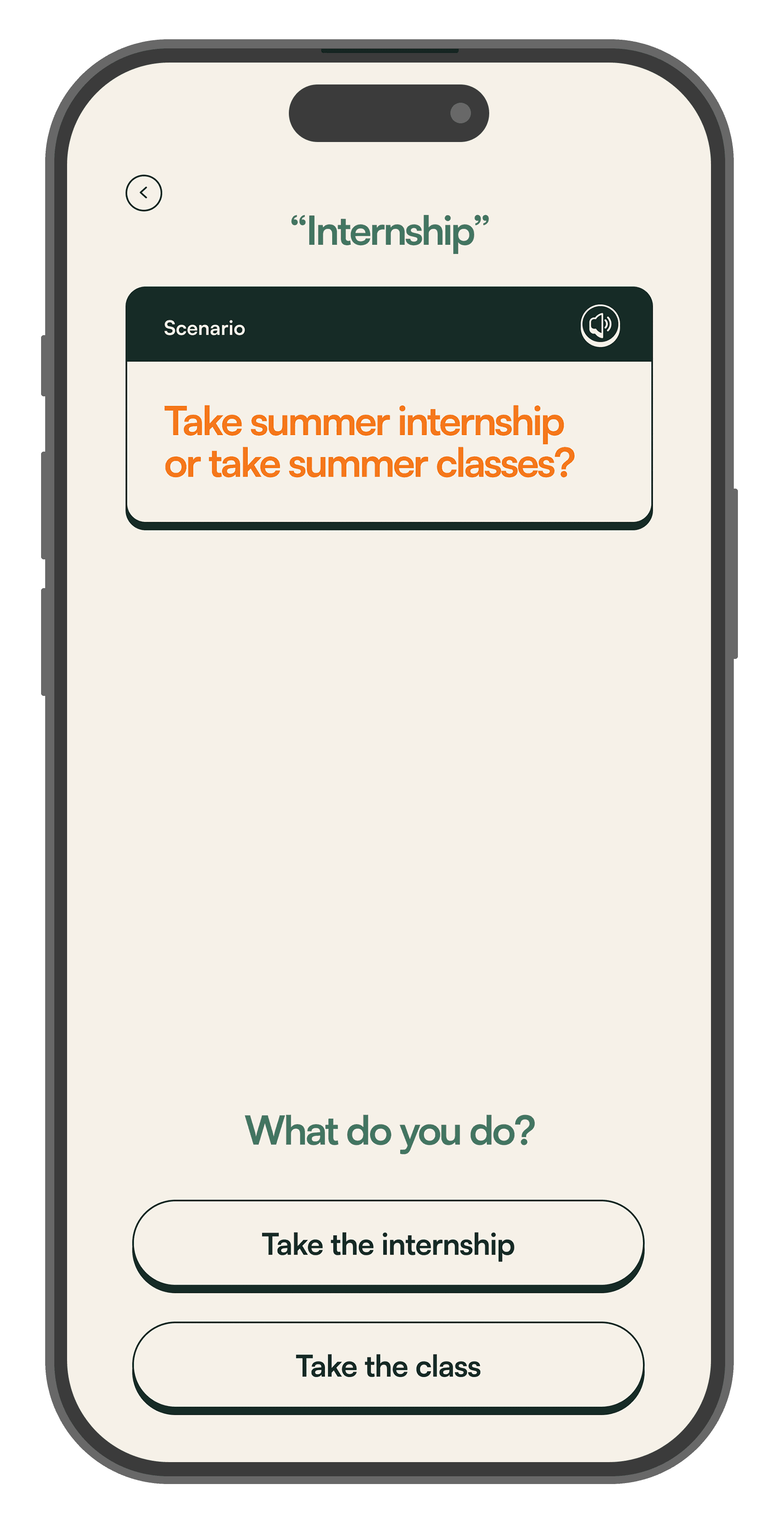
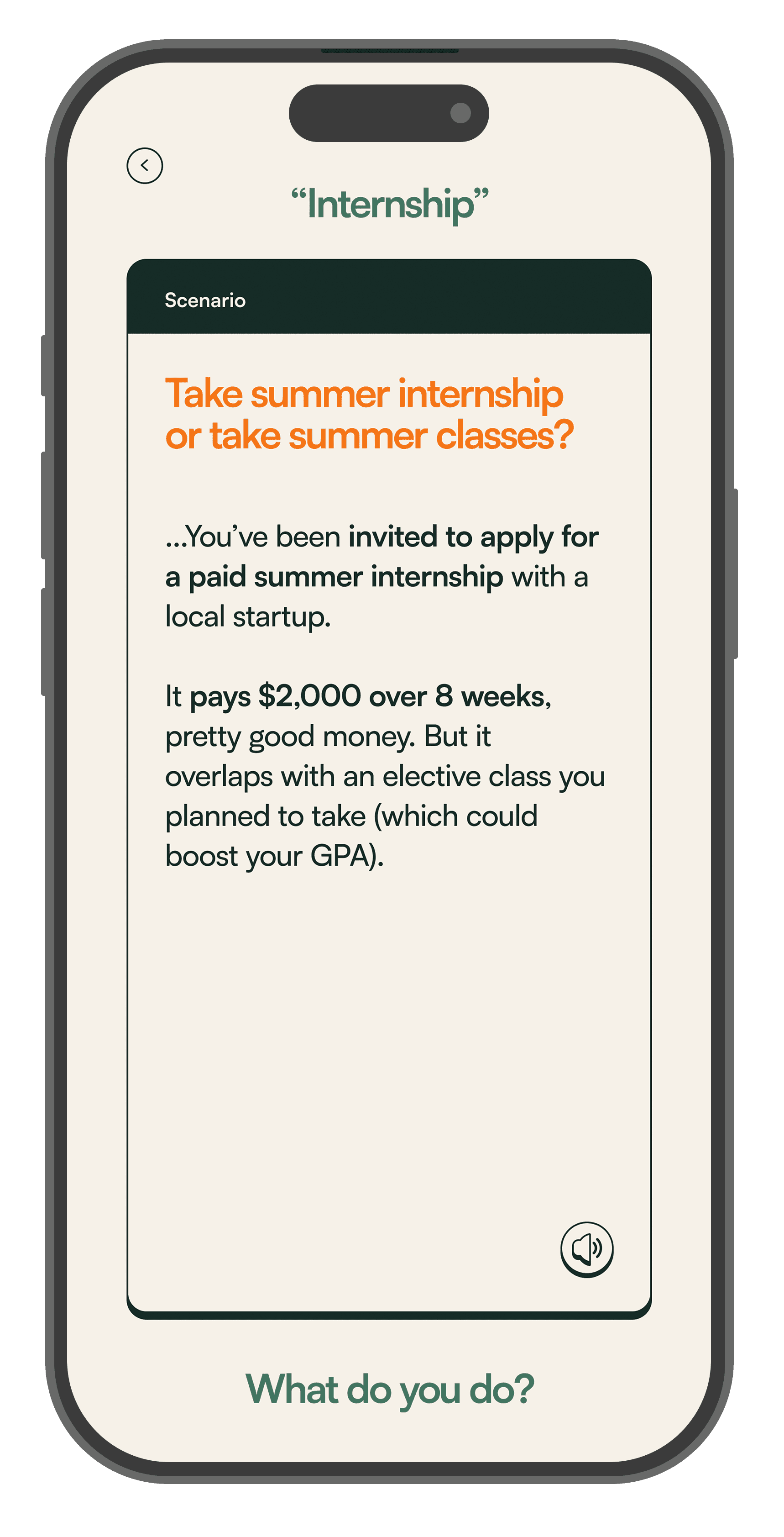
Decades of decisions. Days to play through them.
The scenario system is the heart of Roots. Every challenge is a real life-stage situation - your first paycheck, a surprise medical bill, a chance to invest early or spend now. You choose from 3-4 options. Consequences ripple forward through your tree, branching your path differently depending on what you picked.
But you're never locked in. Tap any past node and replay it. Choose differently. Watch your tree branch in a new direction. Play out every possible option before deciding what you'd actually do, which is the whole point. You can live out an entire financial lifetime here, make every mistake safely, and walk away knowing exactly what you'd do when it counts for real.
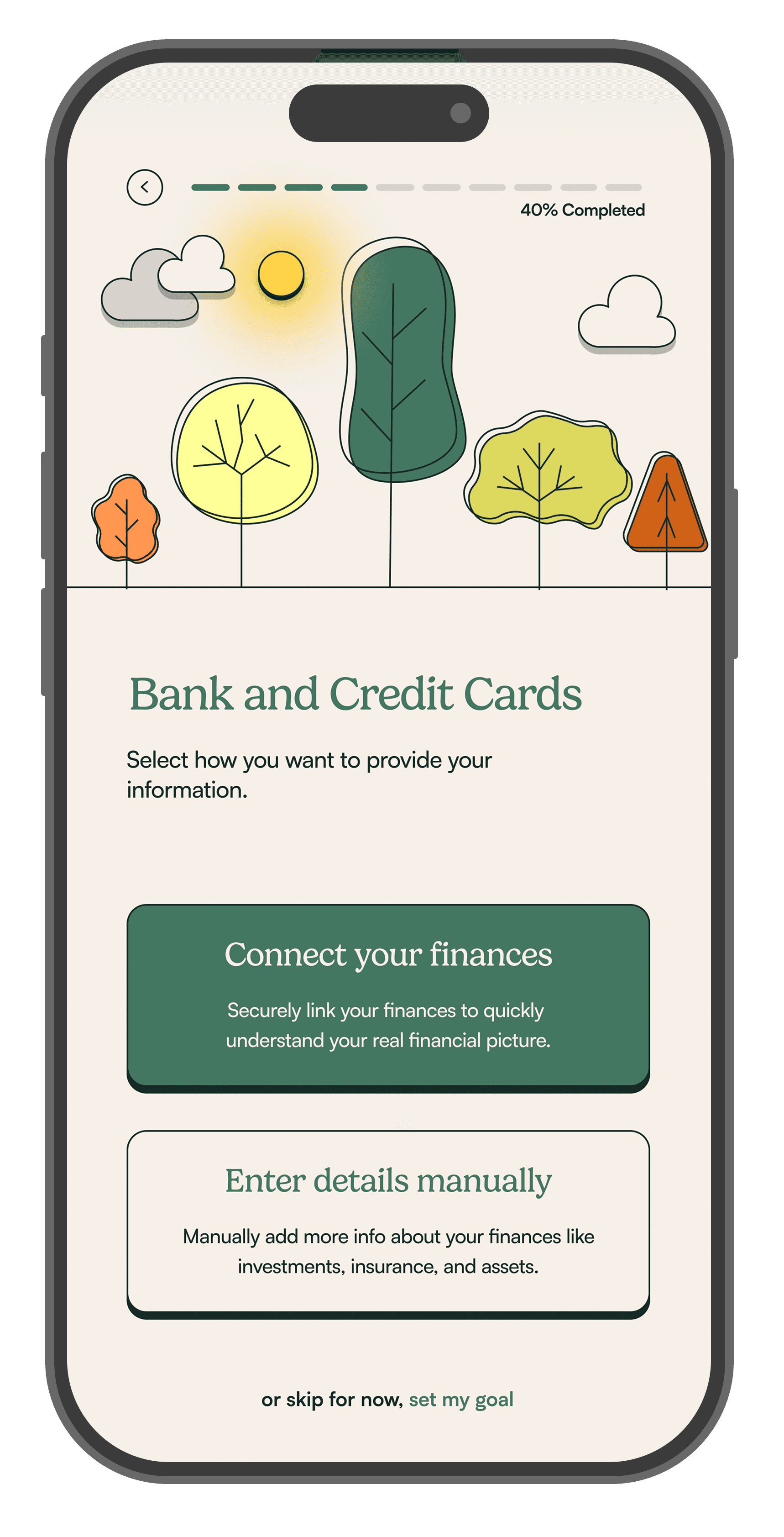
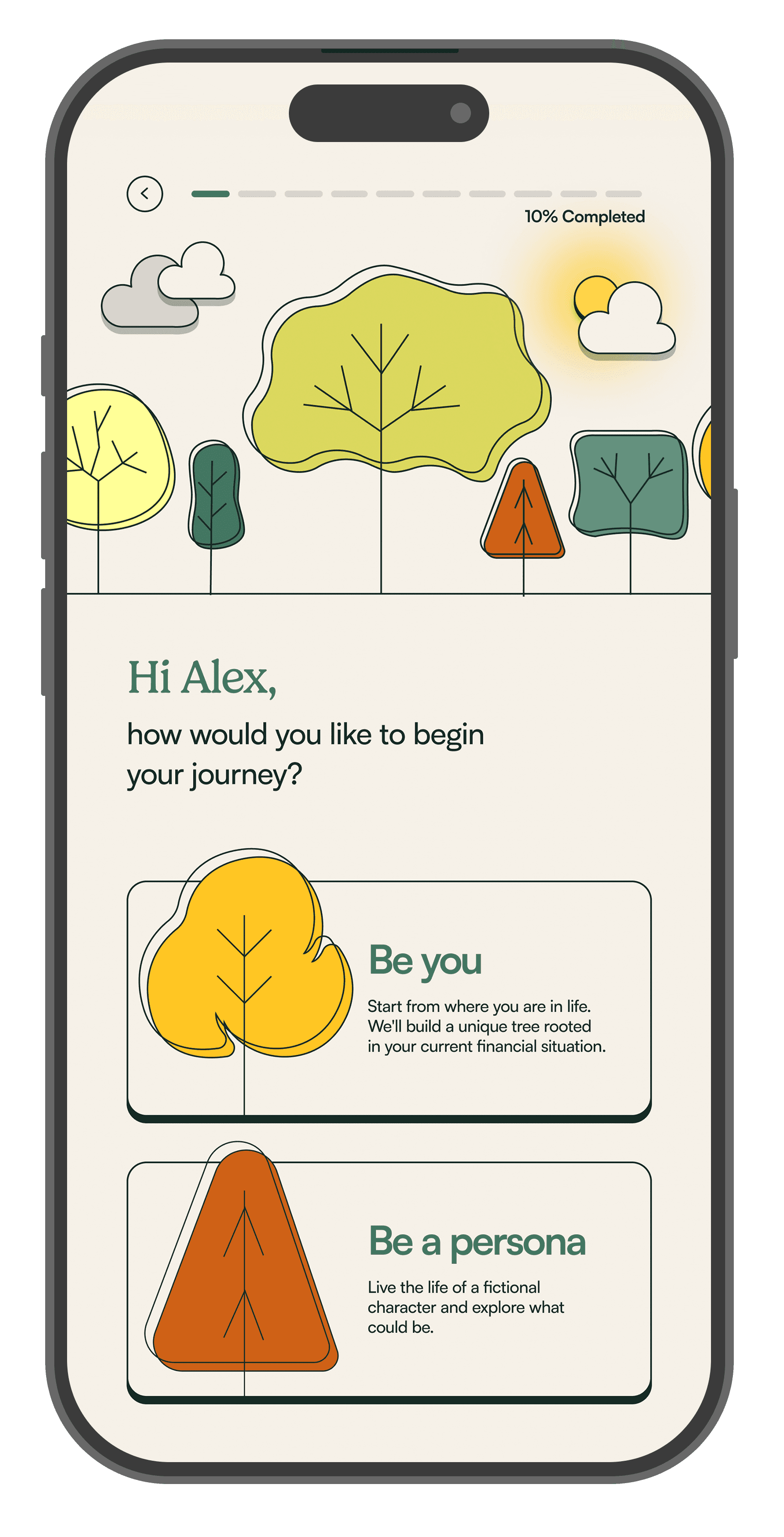
Be You. Or be someone else first.
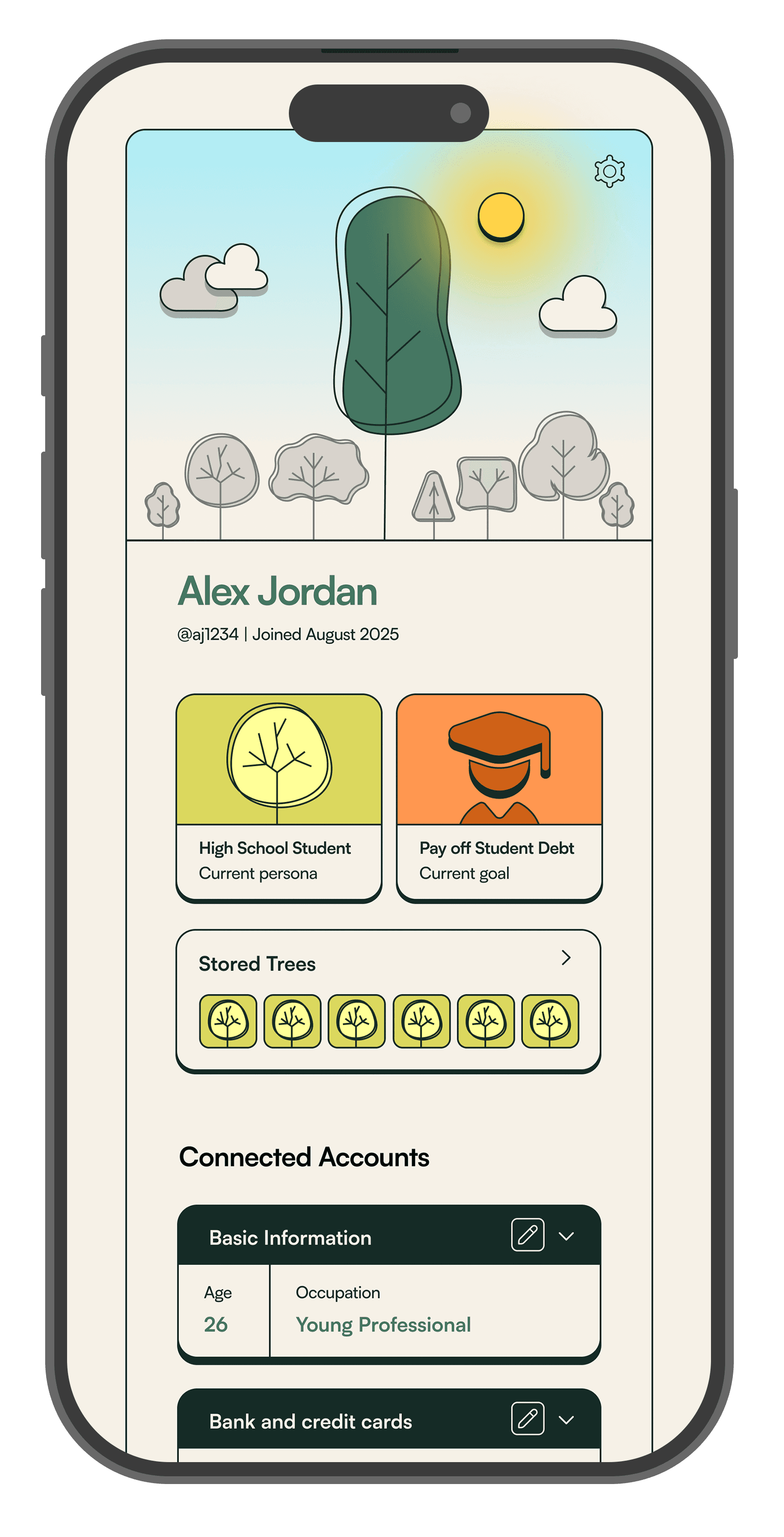
Two paths into Roots: Be a Persona - step into a curated financial life (High School Student, Professional, Freelancer, Parent) and explore without any personal pressure. Or Be You - connect your actual bank accounts, loans, investments, and insurance, and the simulation builds scenarios calibrated to your real financial situation.
The more institutions you connect, the more accurate your tree becomes. The app doesn't just teach generic finance, it shows you what your specific choices, at your specific income and debt level, could actually lead to. The persona path exists because research showed users needed a safe on-ramp before they felt ready to confront their own numbers.
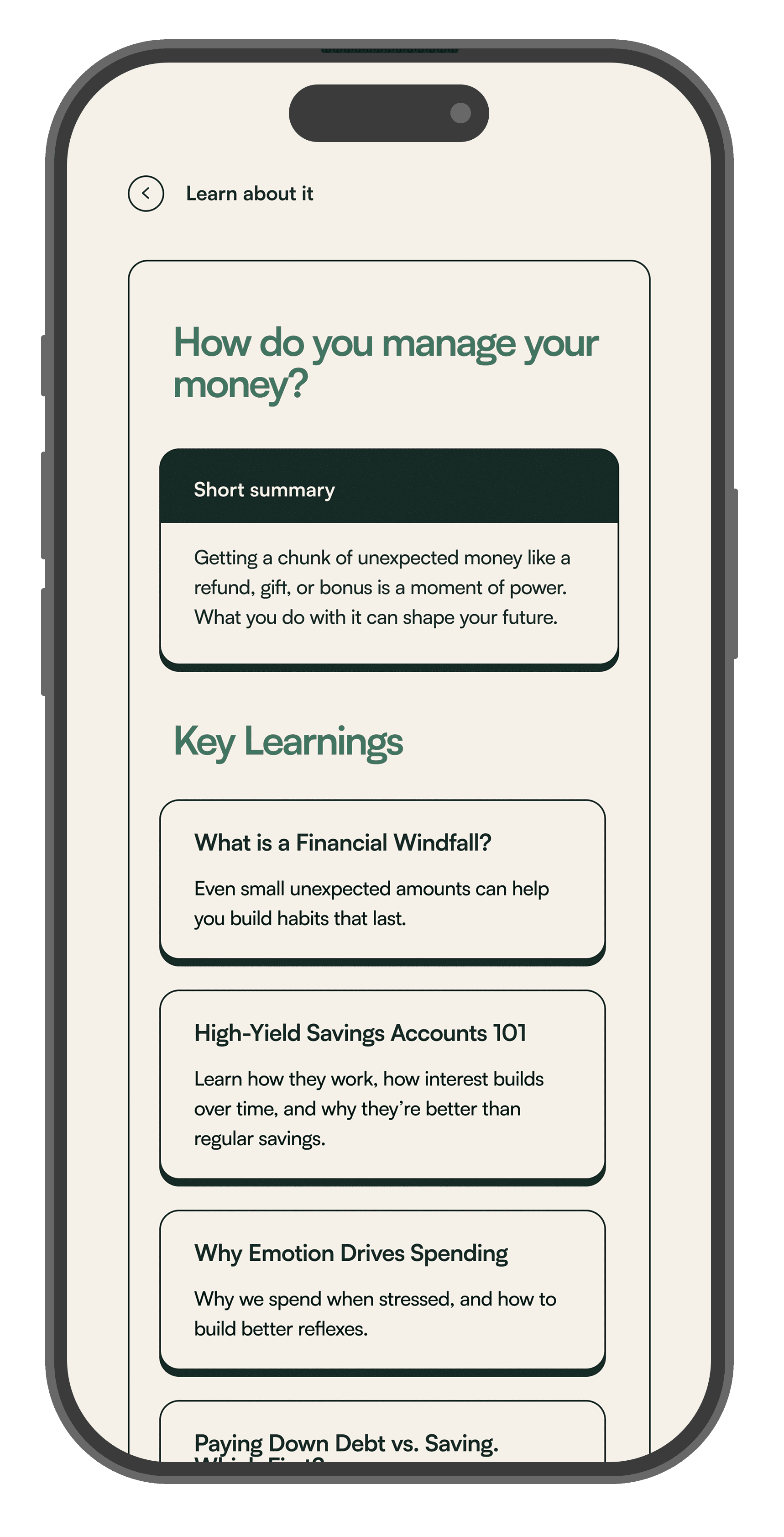
Learning that unlocks as you age through the simulation.
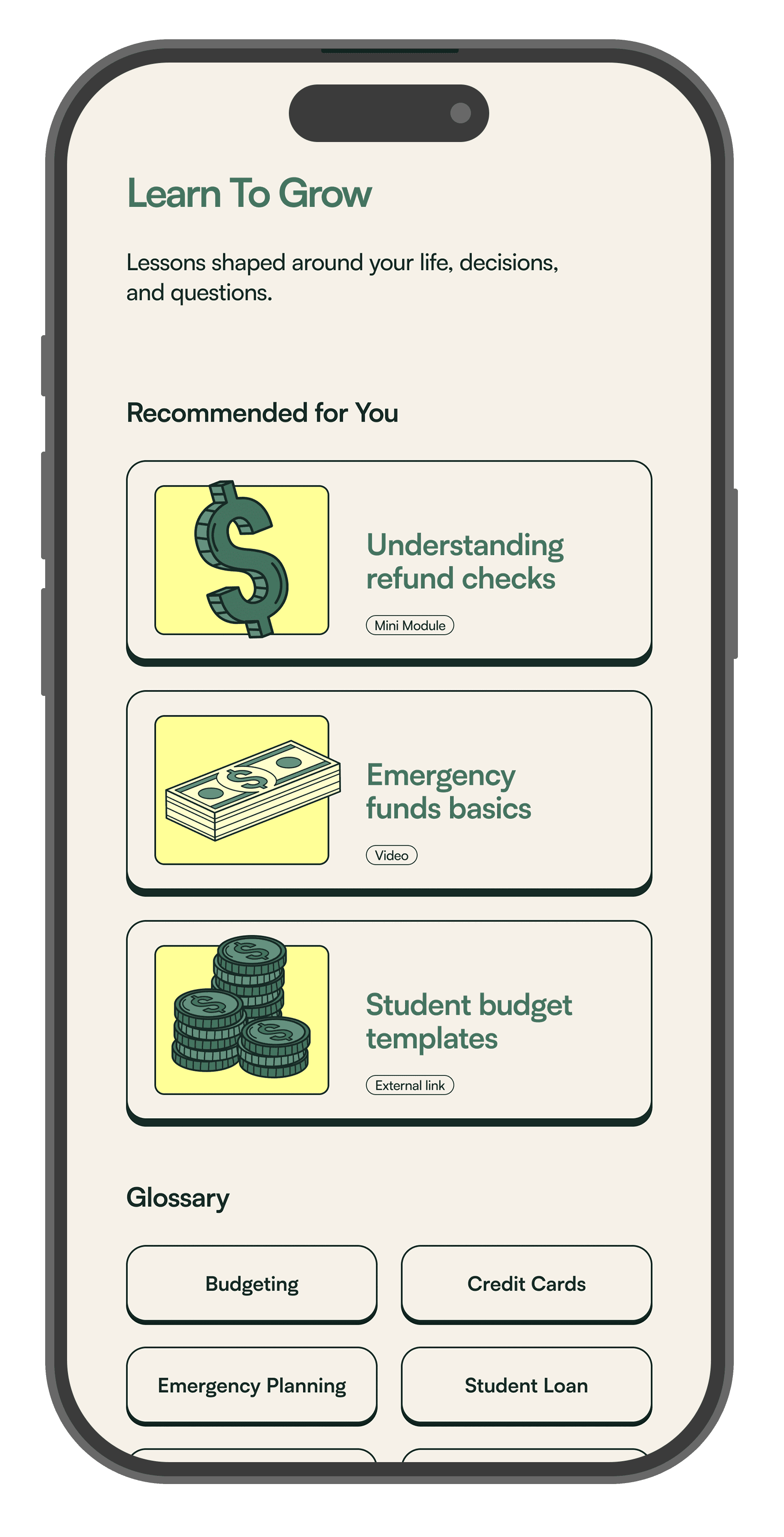
As you progress through the simulation and your in-app age advances, new modules unlock in the Learn tab - content that's relevant to the life stage you're in right now, not a static curriculum. Just played through buying your first home? Lessons about mortgages and property tax appear. Hit retirement age? Content about drawdown strategies surfaces.
Every lesson ties back to the specific tree node that made it relevant, so you can always trace what you learned back to the moment you needed it. The glossary, mini-modules, and AI coach all draw from your personal journey.
Shared trees. Synced goals. Generational inheritance.
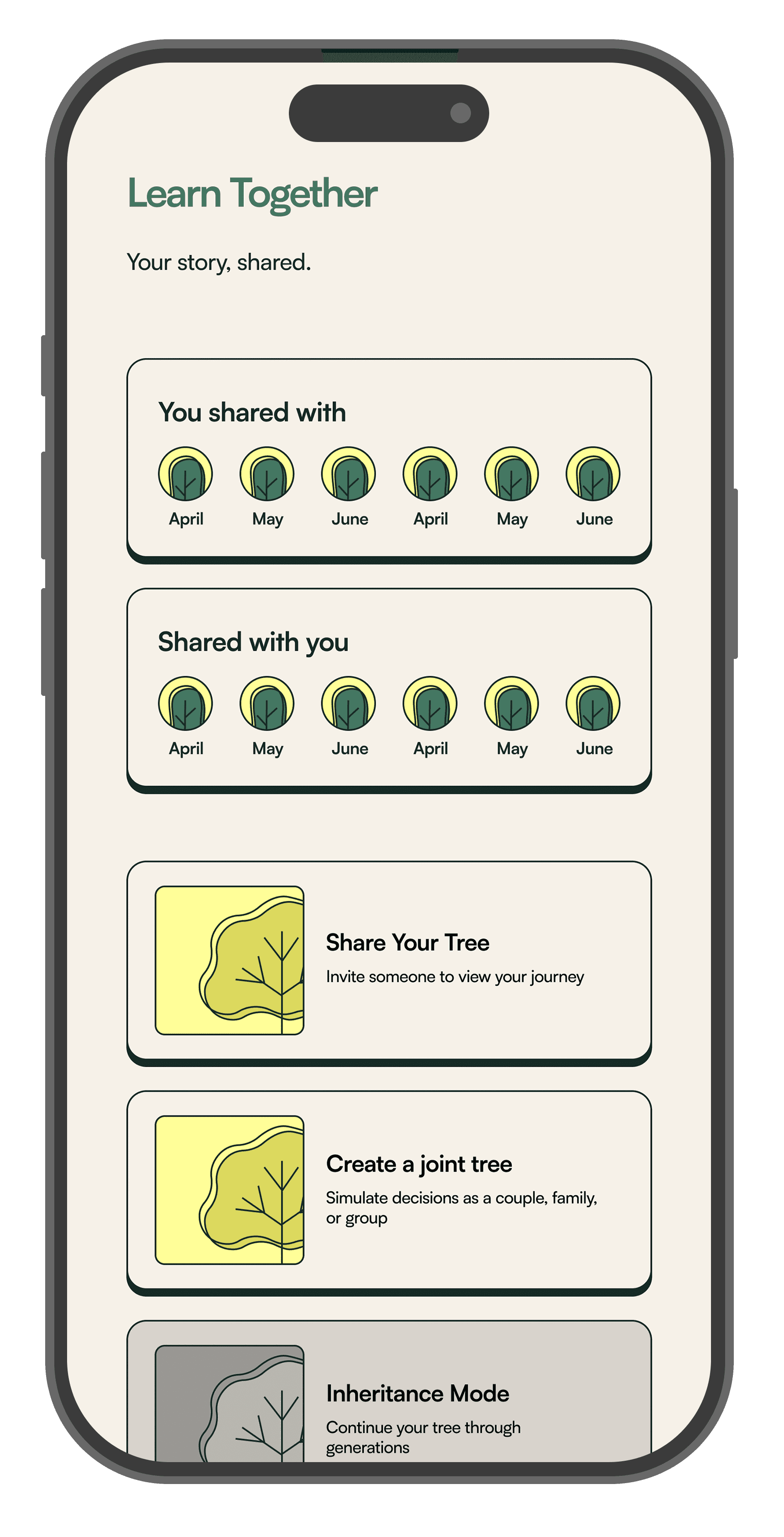
Play Together lets you share your tree with anyone in your life — a partner, a sibling, a friend. You can sync trees at a common life milestone (say, a shared financial goal at age 28), make decisions together from that point forward, and branch apart later if you choose.
But the deepest version of this is Legacy Mode. Play through an entire lifetime, and you can pass your tree to your children or anyone younger in your life. They inherit it — not as a clean slate, but with the income levels, debts, assets, and consequences of your choices baked into their starting point. It transforms Roots from a personal tool into a generational conversation about money, habits, and what we pass forward.
Prototype
This is the real thing.
Click around.
The full high-fidelity prototype, tap through it the way a real user would.
NEXT PROJECT
Trove Experiences
Get in touch


c. Sanjib Bhagawati, 2026
Case Studies
Archive
About
Resume