/Roots
Roots is a financial simulator. You play through decades of money decisions, watch what each one does to your future, then go back and try a different way.
I designed it as the capstone for my UX and Visual Interface Design certificate at the University of Washington. Over six months I ran the research, built the information architecture and the design system, and designed and tested the prototype.
Most people make real financial decisions with almost no preparation, and the apps that already exist assume you understand the basics before you start. I wanted to build one that didn't.
/Role: Lead Product Designer | Certificate Capstone (University of Washington)
/Timeline: 6 months | 2025
/Scope: UX Research | Information Architecture | Visual Design | Design Systems | Gamification | Motion
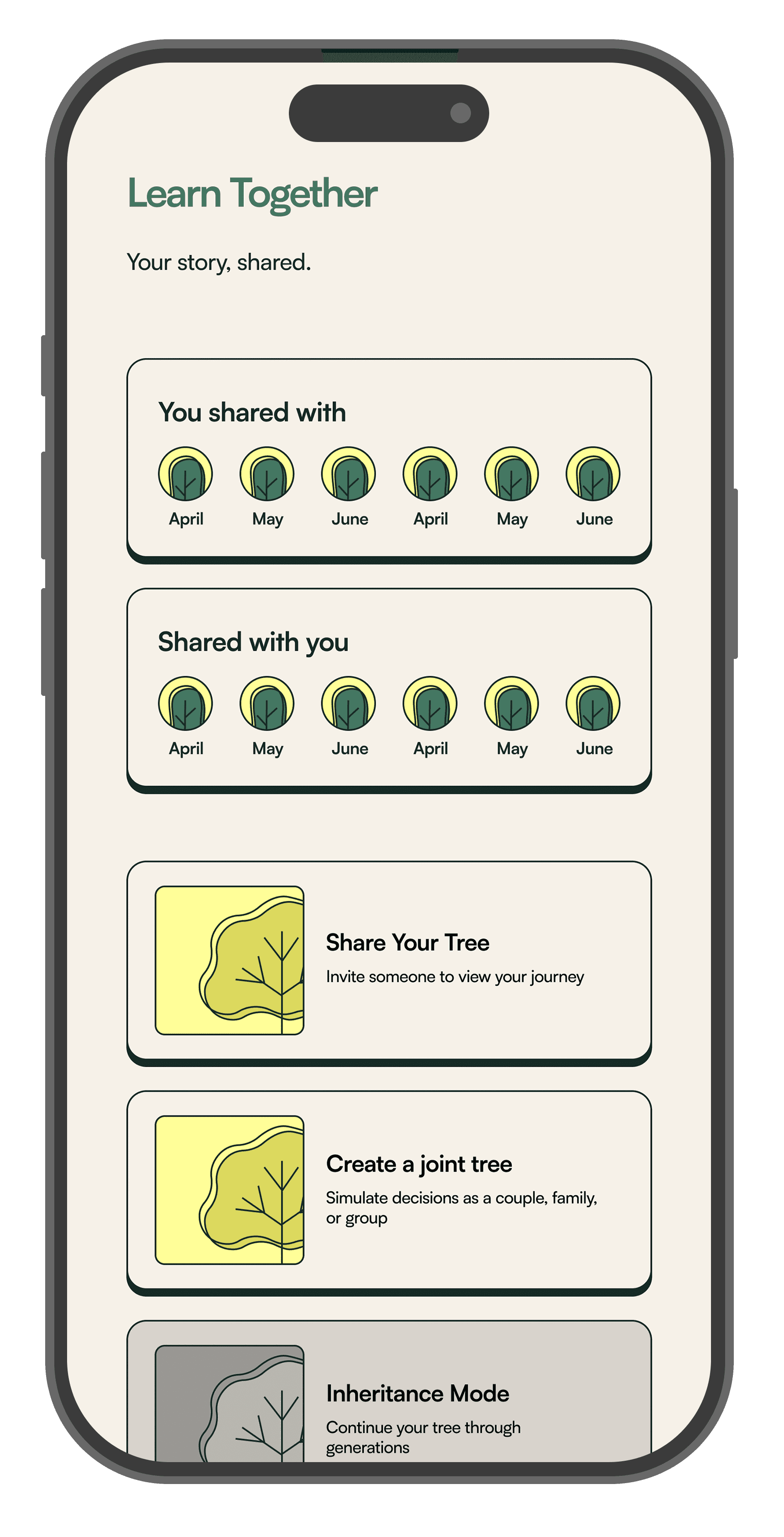
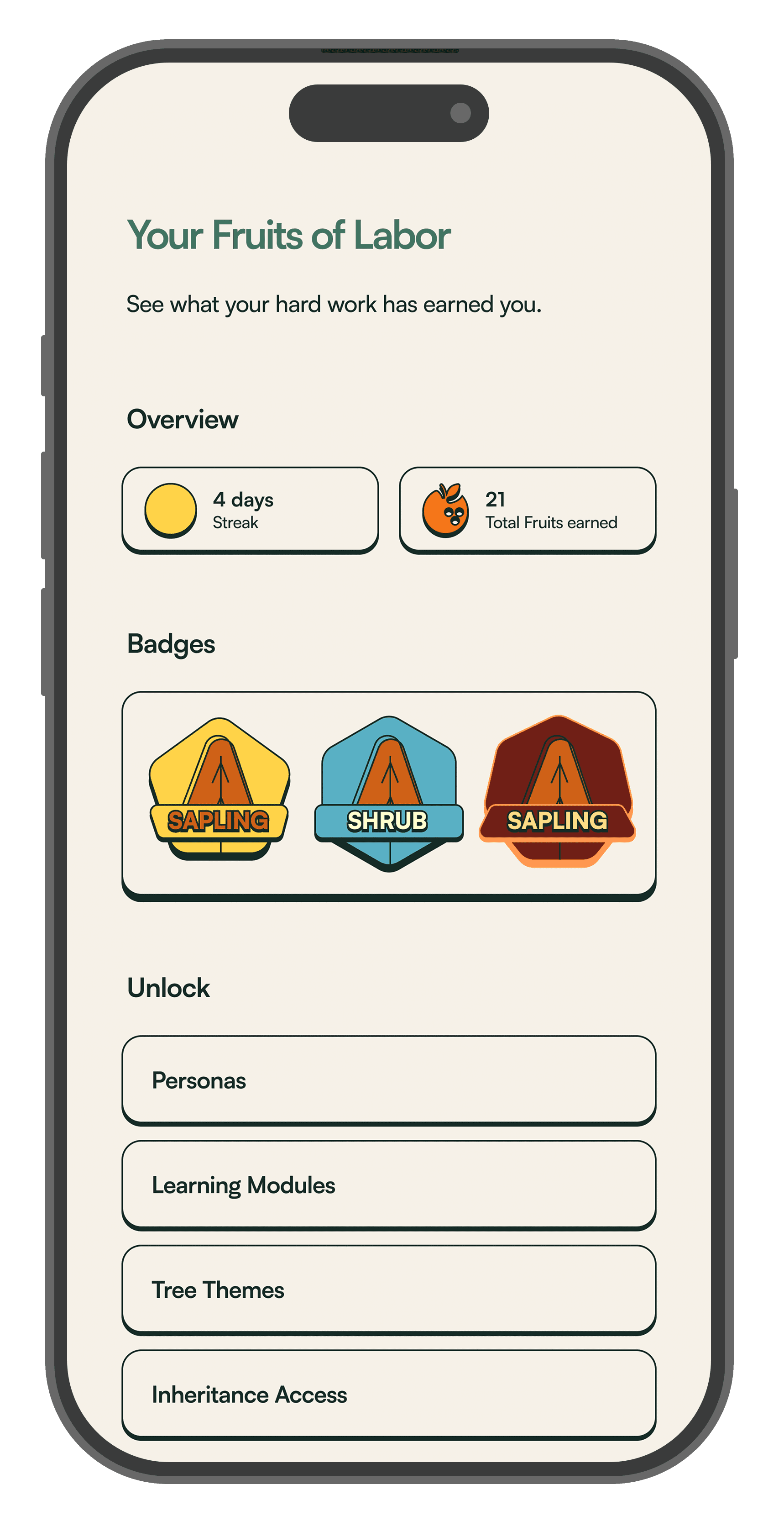
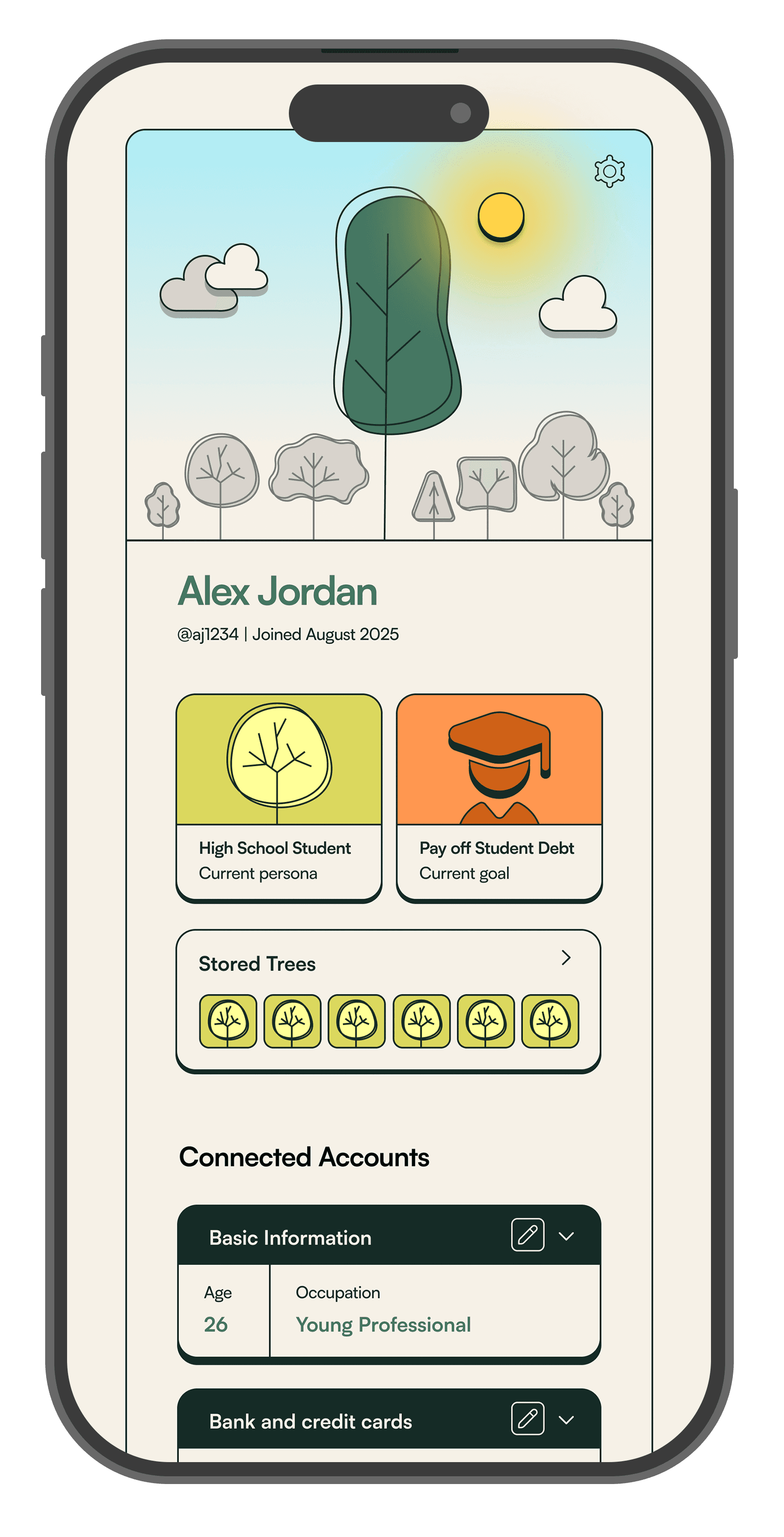
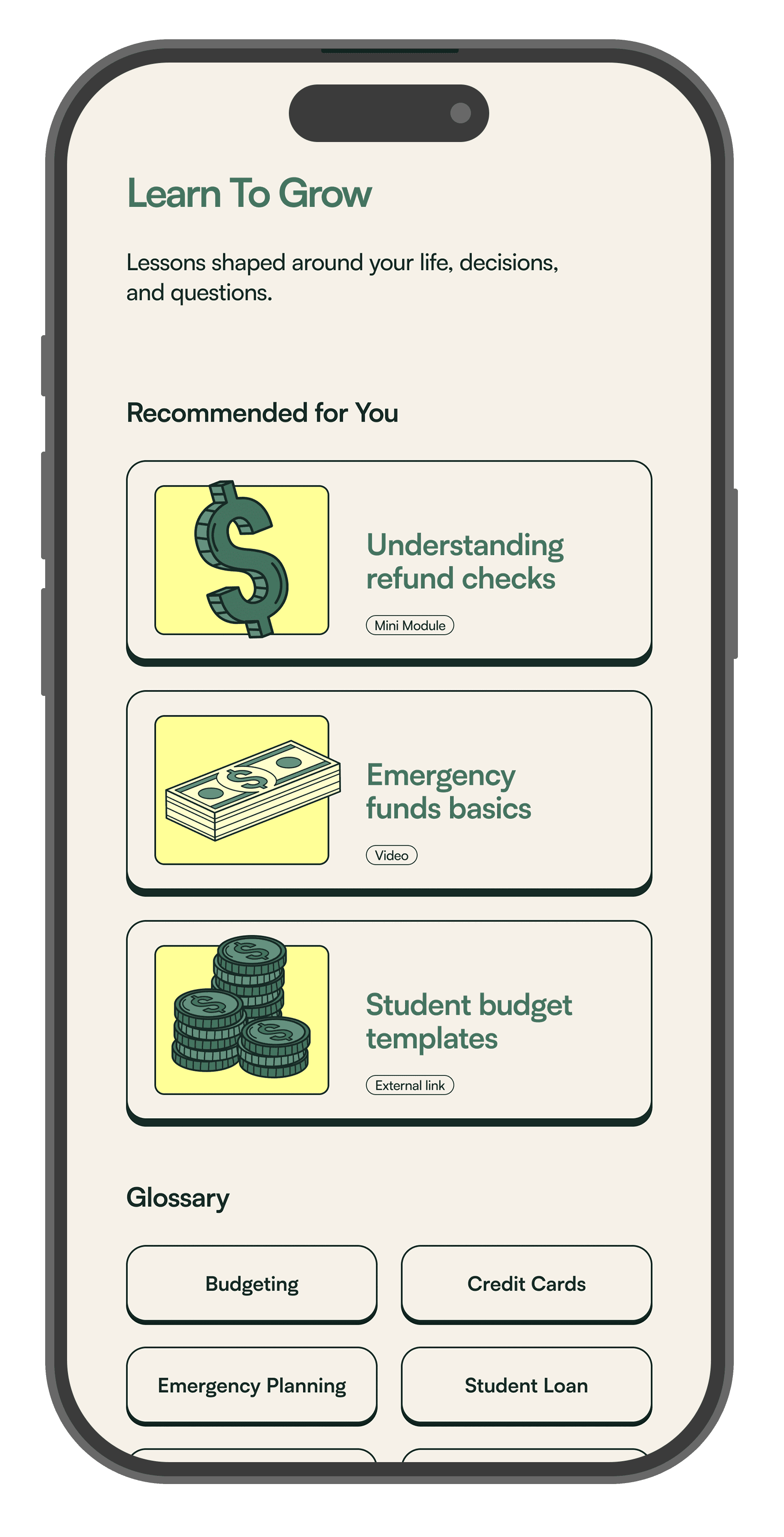
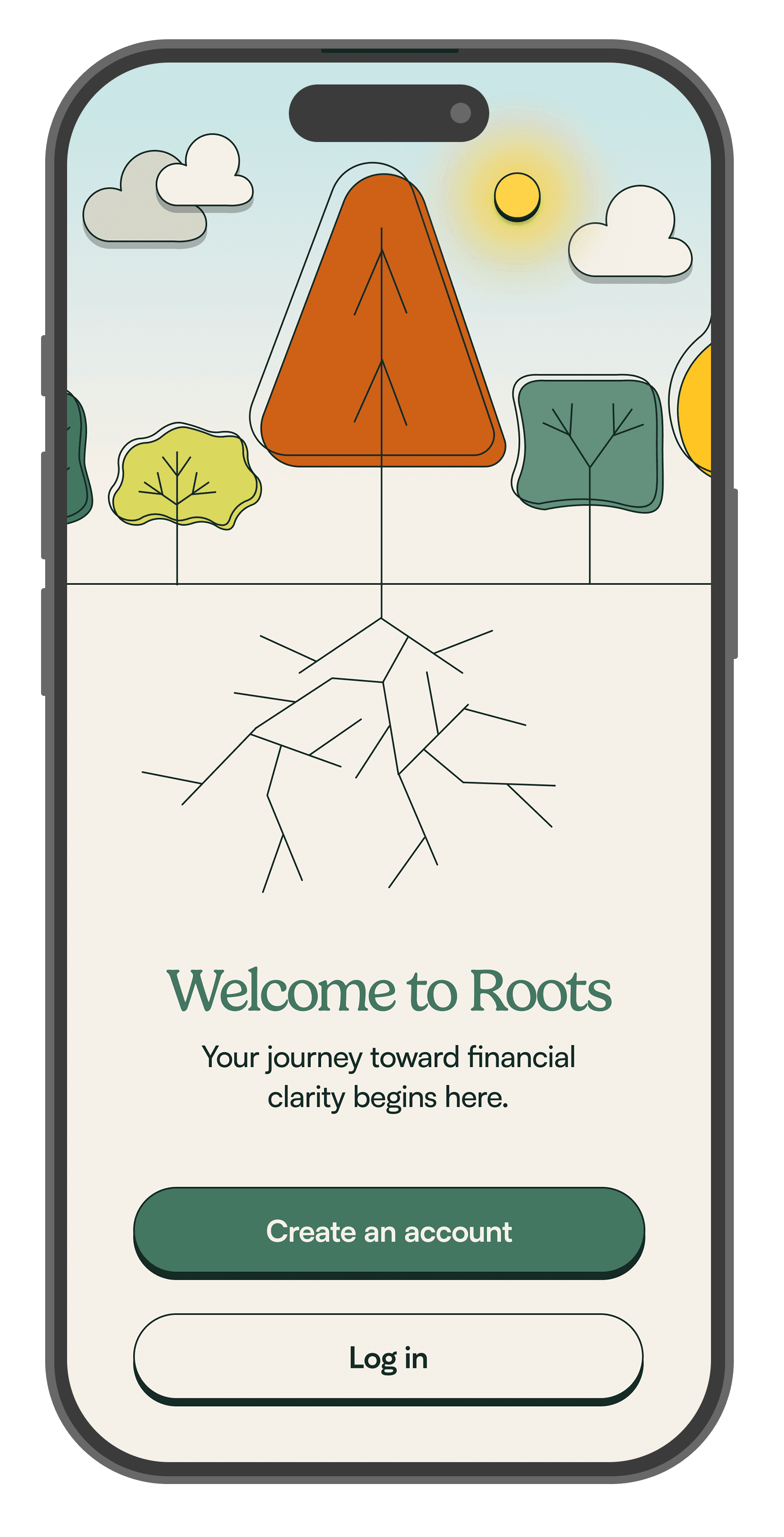
The problem
Most people in their teens, twenties, and early thirties are making real financial decisions with almost no preparation. First paychecks, student loans, rent, credit cards. Schools don't teach it, and parents don't always know how either.
I looked at what already existed, including YNAB, SoFi, Greenlight, and Zogo. The tools either tracked your money or taught concepts in a generic way that had nothing to do with your actual situation.
Existing apps feel complex and intimidating
Most financial tools weren't built for beginners. The language, the interface, and the assumptions all signal that you need to know what you're doing before you start.
The content is abstract, not practical
Learning about a random topic doesn't help when you're looking for something specific to where you are right now. People need guidance attached to real decisions, not definitions.
Apps assume confidence instead of building it
Every app on the market treats financial literacy as a prerequisite. None of them are built to take someone from zero to the confidence to open an account or make a first investment.
Nothing fits your specific situation
A student, a freelancer, and a new parent have entirely different financial realities. Generic tools speak to a generic person, and most people don't see themselves in any of it.
90%
of Gen Z already use digital finance apps for budgeting or investing
35%
financial literacy rate among adults 18 to 24 is the lowest of any age group
/Personas
Benny Beginner
First job, recent grad
Needs financial literacy
Intimidated by investing
Stressed, overwhelmed
DIY Denise
Mid-career investor
Wants portfolio diversity
Confused by options
Time + info overload
/Research Methods
Click through these research methods to see more
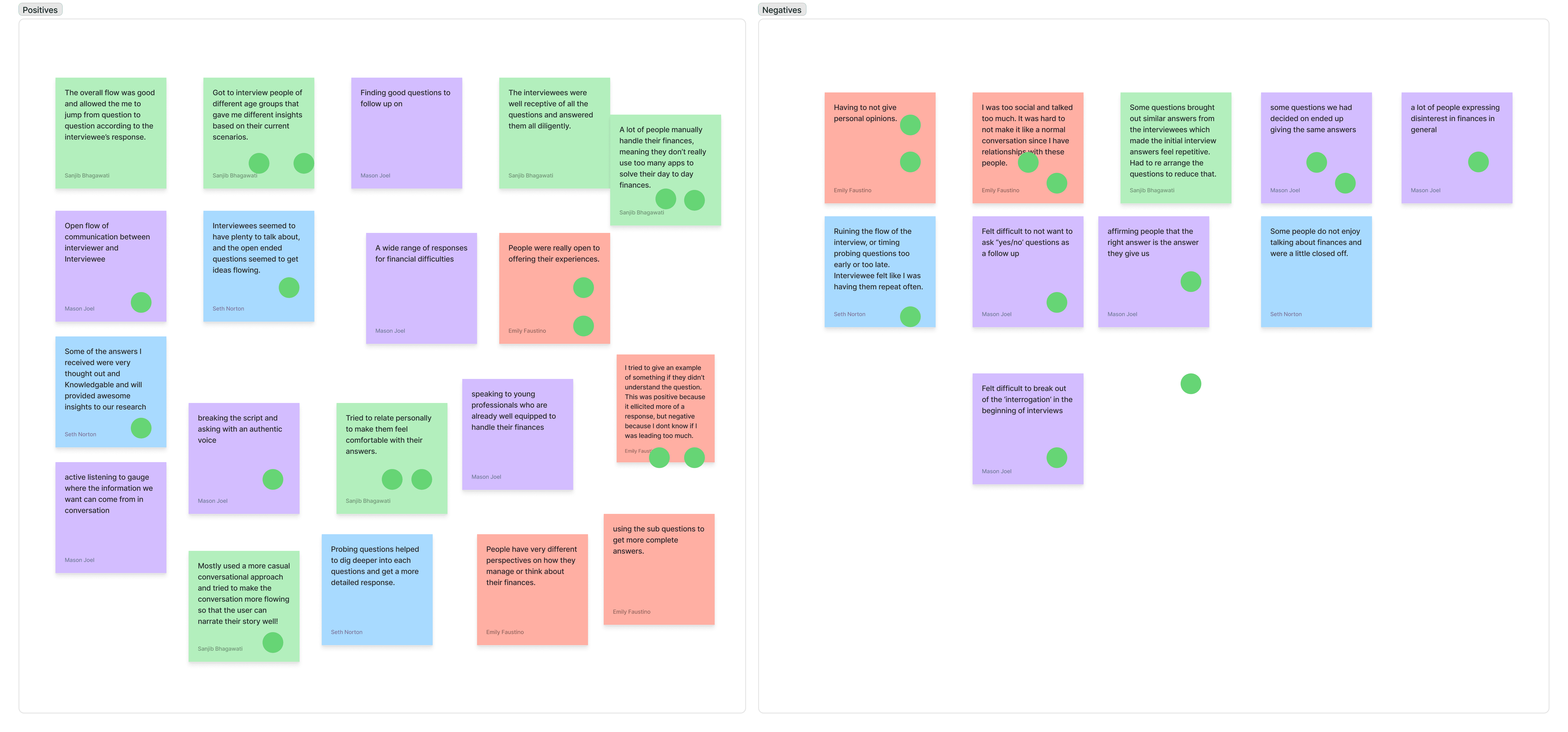
"Most apps feel like they're for people who already know all about money.”
- Research participant, age 34
The concept
A financial simulator
The research pointed to one thing. People don't build financial confidence by being taught it, they build it by living through consequences. So I designed a simulator. You play through decades of financial decisions, make the mistakes, go back, and try again, so that when the real version of the decision arrives you have already been there.
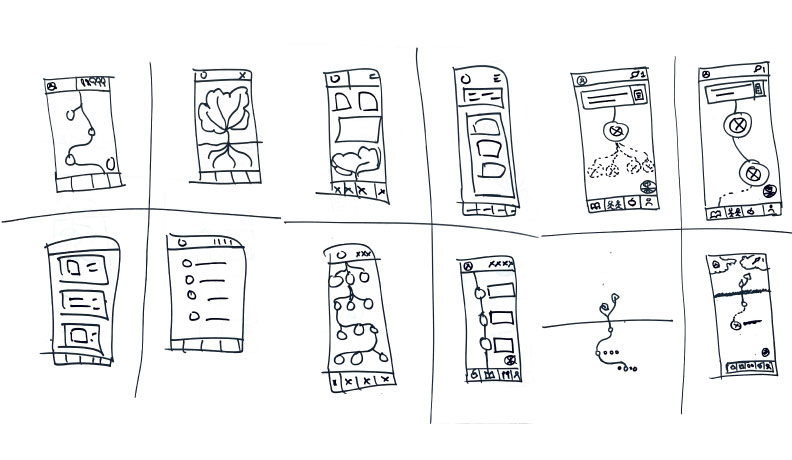
/How the tree came about
The form came out of the concept rather than being planned. The first idea was a timeline, a straight run of challenges based on your age. Once the decision mechanic developed, the paths started branching, because different choices led to different futures. The structure stopped being a line and became a tree. The branching ran downward, which is where roots came from. The deeper your financial roots, the stronger the tree grows.
The process
Seven stages, with two rounds of user feedback.
Click through these stages to see more
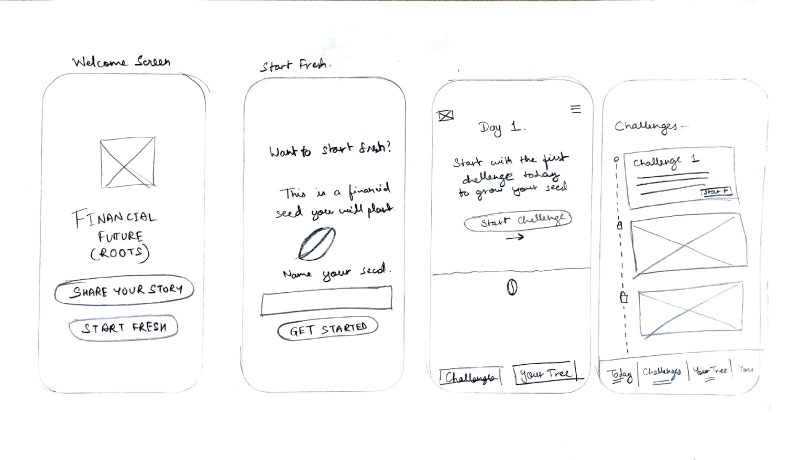
visual language
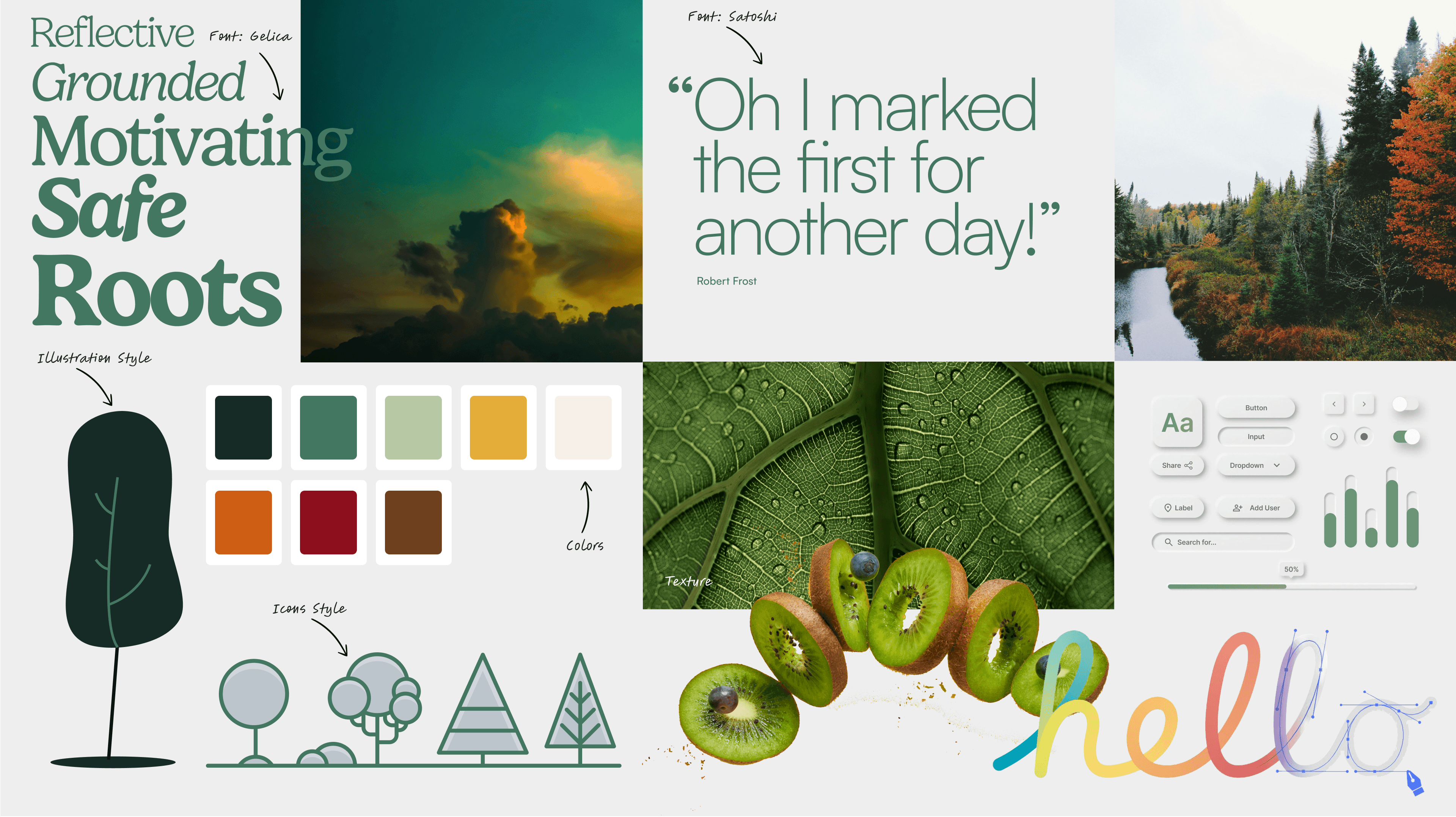
Reflective. Grounded. Motivating. Safe.
I built the visual system around four qualities: reflective, grounded, motivating, and safe. The moodboard drew on organic textures, seasonal forest photography, and a line from Robert Frost about leaving one path for another day. Together they set up a relationship with time and growth that felt personal rather than transactional.
Click through these sections to see more
Key feATURES
Every feature solves a specific fear.
Prototype
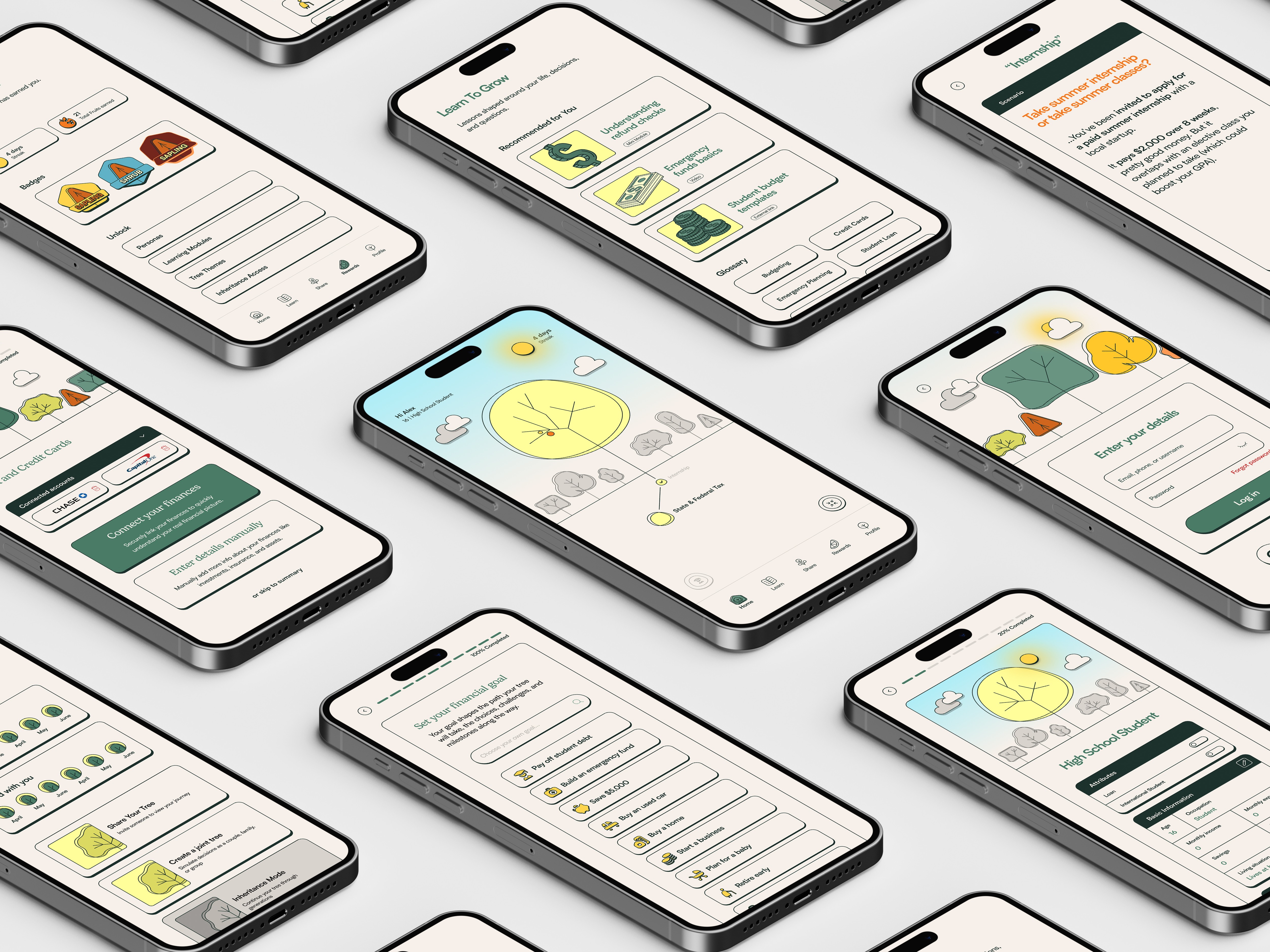
This is the real thing. Click around.
The full high-fidelity prototype. Tap through it the way a user would.