WTW is a financial services company based in London/New York. I was hired as a Digital Designer to help them create a universal grid system and refresh their brochures, reports, email banners, & self-serve presentation templates.
/Role: Digital Designer - Contract
/Years : 2025 - 2026
/Scope: Presentation Template Design | Grid System Design | Layout Design

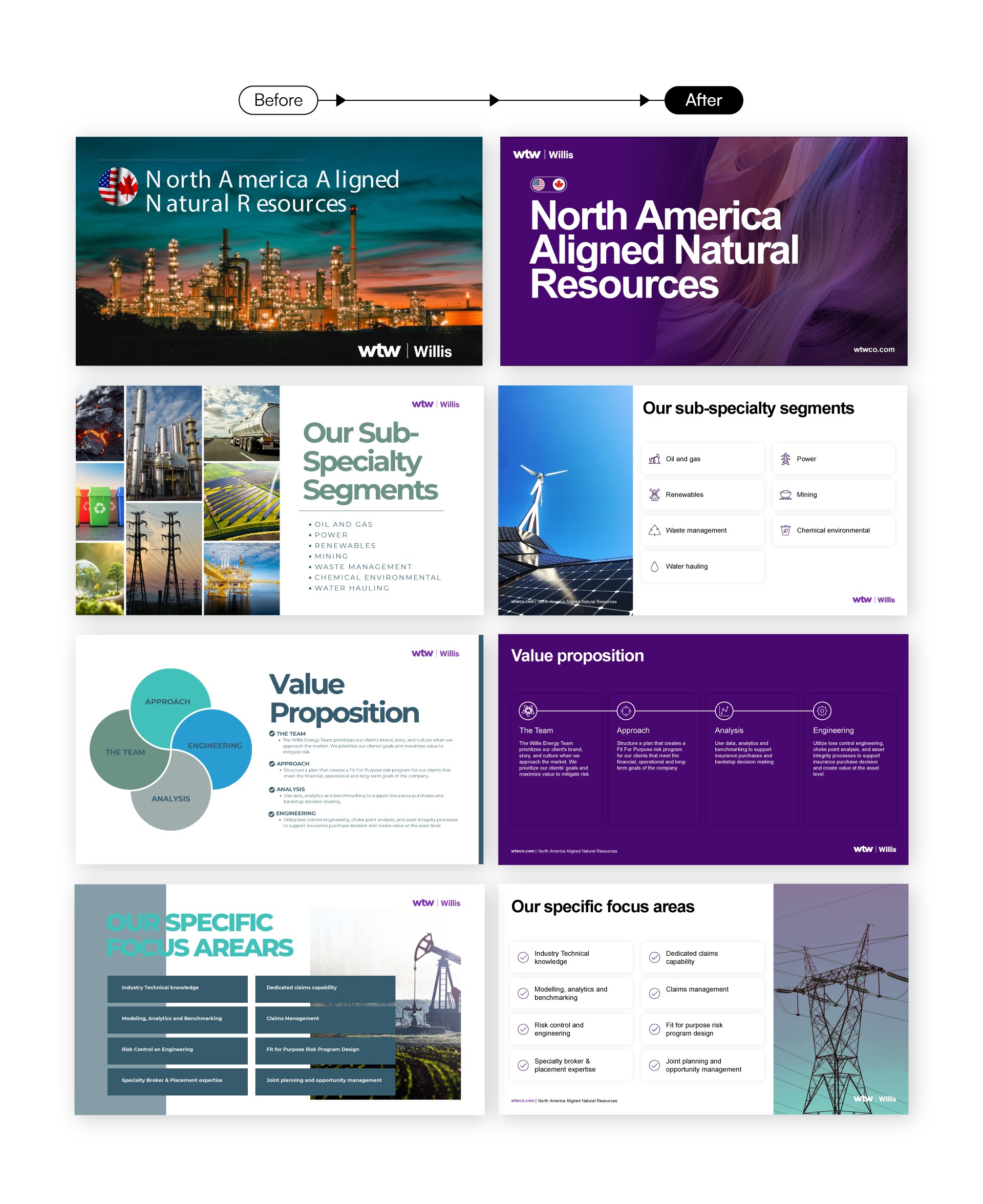
I redesigned outdated brochures, reports, and presentation templates to give them a more modern look and feel while following WTW's brand guidelines.
I worked with the Creative Director to create a universal grid system that would modularize the transformation of data - content heavy vertical format print brochure to an easy-to-understand horizontal format digital presentation.
I also built the campaign identity and design assets for WTW's internal global conference, 2026.
A lot of what I built for this project hasn't been released, and can't be shared publicly. If you'd like to know more, please email me at sanjibbhagawati26@gmail.com.
Brochure, report, and presentation redesign
Initial redesign that is not protected by NDA.
Grid system design
WTW has different documents types like brochures, reports, and presentations, which carry different formatting styles and are created by both designers and non-designers in different types of software. This creates inconsistencies in margins, text and image placements, font sizes and the layouts.
I designed a resizable grid system which can be horizontal for reports, vertical for print brochures, and square for social media creatives.

Horizontal grid for reports
Vertical grid for brochures
Square grid for social media creative
Resizable
Self-serve presentation template design
After the grid system was finalized, the company needed to improve their existing design for the presentation template that is used by more than 50k non-designers across the organization.
I redesigned the master slides and created a refreshed look for the presentation templates.
I can't share any visuals for that yet so please reach out to me to know more.
Highlights
Worked with the Creative Director, Head of Design - Natural Resources, and the Design team at WTW
Redesigned 8+ asset types like brochures, reports, and presentations by creating a resizable grid
Created self-serve presentation templates to be used by more than 50k+ employees across the organization
Built the campaign identity and design assets for WTW's internal global conference, 2026